Selected references:
“Fanconi anemia: Current insights regarding epidemiology, Cancer and DNA repair”
Peake JD, Noguchi E*
Human Genetics, doi: 10.1007/s00439-022-02462-9 (2022)
“The methyltransferase enzymes KMT2D, SETD1B, and ASH1L, are key mediators of both metabolic and epigenetic changes during cellular senescence”
Nacarelli T, Azar A, Potnis M, Johannes G, Mell J, Johnson FB, Brown-Borg H, Noguchi E, Sell C
Mol. Biol. Cell, 33(5):ar36. (2022)
“Alcohol metabolism enriches squamous cell carcinoma cancer stem cells that survive oxidative stress via autophagy”
Shimonosono M, Tanaka K, Flashner S, Takada S, Matsuura N, Tomita Y, Sachdeva UM, Noguchi E, Sangwan V, Ferri L, Momen-Heravi F, Yoon AJ, Klein-Szanto AJ, Diehl A, Nakagawa H
Biomolecules, 11(10): 1479. (2021)
“FANCD2 limits acetaldehyde-induced genomic instability during DNA replication in esophageal keratinocytes”
Peake JD, Noguchi C, Lin B, Theriault A, O'Connor M, Sheth S, Tanaka K, Nakagawa H, Noguchi E*
Mol Oncol. 15(11): 3109-3124. (2021)
“Maf1 limits RNA polymerase III-directed transcription to preserve genomic integrity and extend lifespan”
Noguchi C, Wang L, Shetty M, Mell JC, Sell C, Noguchi E*
Cell Cycle, 20(3):247-255. (2021)
“Autophagy mitigates ethanol-induced mitochondrial dysfunction and oxidative stress in esophageal keratinocytes”
Chandramouleeswaran PM, Guha M, Shimonosono M, Whelan KA, Maekawa H, Sachdeva UM, Ruthel G, Mukherjee S, Engel N, Gonzalez MV, Garifallou J, Ohashi S, Klei-Szanto AJ, Mesaros CA, Blair IA, Pellegrino da Silva R, Hakonarson H, Noguchi E, Baur JA, Nakagawa H
PLoS ONE, 15 (9):e0239625. (2020)
“Genetic investigation of formaldehyde-induced DNA damage response in Schizosaccharomyces pombe”
Anandrajan V, Noguchi C, Oleksak J, Grothusen G, Terlecky D, Noguchi E*
Current Genetics, 66(3): 593-605. (2020)
"Maf1-dependent transcriptional regulation of tRNAs prevents genomic instability and is associated with extended lifespan"
Shetty M, Noguchi C, Wilson S, Martinez E, Shiozaki K, Sell C, Mell JC, Noguchi E*
Aging Cell, 19(2): e13068. (2020)
"The NuA4 acetyltransferase and histone H4 acetylation promote replication recovery after topoisomerase I-poisoning"
Noguchi C, Singh T, Ziegler MA, Peake JD, Khair L, Aza A, Nakamura TM, Noguchi E*
Epigenetics & Chromatin, 12(1):24. (2019)
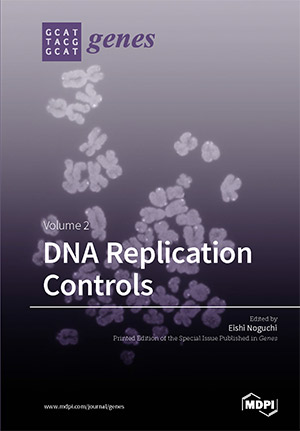
Books: DNA Replication Controls Volumes 1 and 2
Noguchi E (Editor)
Genes (Basel), MDPI. (2016-2017)
"Regulation of DNA replication through natural impediments in the eukaryotic genome”
Gadaleta MC, Noguchi E*
Genes (Basel), 8(3):98. (2017)
"Genetic controls of DNA damage avoidance in response to acetaldehyde in fission yeast"
Noguchi C, Grothusen G, Anandarajan V, Martínez-Lage García M, Terlecky D, Corzo K, Tanaka K, Nakagawa H, Noguchi E*
Cell Cycle, 16(1): 45-58. (2017)
"Timeless protection of telomeres"
Gadaleta MC, González-Medina A, Noguchi E*
Curr Genet, 62(4): 725-730. (2016)
"ALDH2 modulates autophagy flux to regulate acetaldehyde-mediated toxicity thresholds"
Tanaka K, Whelan KA, Chandramouleeswaran PM, Kagawa S, Rustgi SL, Noguchi C, Guha M, Srinivasan S, Amanuma Y, Ohashi S, Muto M, Klein-Szanto AJ, Noguchi E, Avadhani NG, Nakagawa H
Am J Cancer Res, 6(4): 781-796. (2016)
"Swi1/Timeless prevents repeat instability at fission yeast telomeres"
Gadaleta MC, Das MM, Tanizawa H, Chang Y, Noma K, Nakamura TM, Noguchi E*
PLOS Genetics, 12 (3): e1005943. doi:10.1371/journal.pgen.1005943 (2016)
"Chromatin immunoprecipitation to detect DNA replication and repair factors"
Gadaleta MC, Iwasaki O, Noguchi C, Noma K, Noguchi E*
Methods in Mol Biol, 1300: 169-186 (2015)
Book: Cell Cycle Control, Mechanisms and Protocols
Noguchi E, Gadaleta MC (Eds.)
Methods in Molecular Biology, Humana Press/Springer, Vol. 1170 (2014)
"Introductory review of computational cell cycle modeling"
Kriete A, Noguchi E, Sell C
Methods in Mol Biol, 1170: 267-265 (2014)
"Linking chromosome duplication to segregation via sister chromatid cohesion"
Leman AR, Noguchi E*
Methods in Mol Biol, 1170: 75-98 (2014)
"Chromatin immunoprecipitation to investigate origin association of replication factors in mammalian cells"
Leman AR, Noguchi E*
Methods in Mol Biol, 1170: 539-547 (2014)
"New Vectors for epitope tagging and gene disruption in Schizosaccharomyces pombe"
Gadaleta MC, Iwasaki O, Noguchi C, Noma K, Noguchi E*
BioTechniques, 55(5): 257-263. (2013)
"Proteasome-dependent degradation of replisome components regulates faithful DNA replication"
Roseaulin LC, Noguchi C, Noguchi E*
Cell Cycle, 12(16): 2564-2569. (2013)
"Roles of ChlR1 DNA helicase in replication recovery from DNA damage"
Shah N, Inoue A, Lee SW, Beishline K, Lahti JM, Noguchi E*
Exp. Cell Res, 319(14): 2244-2253. (2013)
"PP2A(Cdc55/B55), a possible therapeutic target in cyclin D1-dependent cancers"
Noguchi E*
Cell Cycle, 12(10): 1484-1485. (2013)
"The replication fork: Understanding the eukaryotic replication machinery and the challenges to genome duplication"
Leman AR, Noguchi E*
Genes (Basel), 4(1): 1-32. (2013)
"Coordinated degradation of replisome components ensures genome stability upon replication stress in the absence of the replication fork protection complex"
Roseaulin LC, Noguchi C, Martinez E, Ziegler MA, Toda T, Noguchi E*
PLoS Genetics, 9(1): e1003213. (2013)
"Epigenetic regulation of condensin-mediated genome organization during the cell cycle and upon DNA damage through histone H3 lysine 56 acetylation"
Tanaka A, Tanizawa H, Sriswasdi S, Iwasaki O, Chatterjee AG, Speicher DW, Levin HL, Noguchi E, Noma K
Mol Cell, 48:532-546. (2012)
"Local and global functions of Timeless and Tipin in replication fork protection"
Leman AR, Noguchi E*
Cell Cycle, 11 (21), 3945-3955. (2012)
"Swi1 associates with chromatin through the DDT domain and recruits Swi3 to preserve genomic integrity"
Noguchi C, Rapp JB, Skorobogatko YV, Bailey LD, Noguchi E*.
PLoS ONE, 7(8): e43988. (2012)
"Timeless preserves telomere length by promoting efficient DNA replication through human telomeres"
Leman AR, Dheekollu J, Deng Z, Lee SW, Das, MM, Lieberman PM, Noguchi E*
Cell Cycle, 11(12): 2337-2347. (2012).
"The double-bromodomain proteins Bdf1 and Bdf2 modulate chromatin structure to regulate S-phase stress response in Schizosaccharomyces pombe"
Garabedian MV, Noguchi C, Ziegler MA, Das MM, Singh T, Harper LJ, Leman AR, Khair L, Moser BA, Nakamura TM, Noguchi E*
Genetics, 190(2): 487-500. (2012).
Go to all publications