The Master of Laboratory Animal Science (MLAS) degree is a full-time, two-year program designed for pre-vet or animal science students who want to pursue advanced careers in laboratory animal science or biomedical research. The MLAS degree is also a proven enhancement to a veterinary school application. Since the program's inception, MLAS alumni have accepted offers at more than half of the accredited U.S. Veterinary Medical Colleges.
The Master of Laboratory Animal Science program is the right choice if:
- You want to enhance your veterinary school application with the specialization that a master's degree provides
- You are interested in pursuing career alternatives in biology and animal science other than veterinary medicine
Now offering a Pre-Veterinary Graduate Minor!
Students desiring to attend veterinary medical school will have the option to elect to complete a pre-vet minor within the Master of Laboratory Animal Science (MLAS) program. Learn More!
MLAS News & Events
2024 International Laboratory Animal Technician Week
January 29 - February 4, 2024
This annual celebration recognizes laboratory animal technicians for their essential contributions as members of the research team. Every day of the year, these dedicated people provide the solid foundation of consistent animal husbandry, care and observation of animals necessary for quality research work and good science.
View Recorded International Laboratory Animal Technician Week Webinar
Learn More About International Laboratory Animal Technician Week
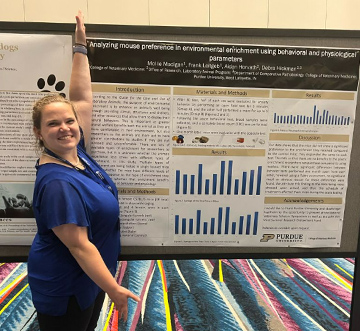
Mollie Madigan
Alumni News
MLAS alum Mollie Madigan presented a summer research project at the National Veterinary Scholars Symposium in San Juan, Puerto Rico (August 3-6, 2023), sponsored by Boehringer Ingelheim and the American Association of Veterinary Medical Colleges.
MLAS graduate, Kirsten Bell '21, contributed to a preview article about the national meeting about culture of care in "Culture of Care: A Comprehensive Approach to Supporting People and Animals" in the September 2023 issue of Laboratory Animal Science Professional.
Mastering Laboratory Animal Science
MLAS program's Erin Vogelsong discusses mastering laboratory animal science (episode 31) with the Lab Rat Chat podcast. Lab Rat Chat is a podcast dedicated to providing the public with factual information about the importance of humane and ethical animal research. It was made possible through the Michael D. Hayre Fellowship in Public Outreach, which is sponsored by Americans for Medical Progress. Listen to the episode.
MLAS Program On-Campus and Online Options FAQ
The MLAS program's Erin Vogelsong explains how the program helps students get into veterinary school and the differences between the on-campus and online options.
Read more.
Meet Our Students & Alumni
"I chose to apply to Drexel to extend my knowledge about lab animal science and research. My interest in veterinary medicine helped me discover my passion for research. I felt that the Drexel MLAS program would provide me with a solid foundation of rigorous biological science courses as well as a well-rounded education in the many other variables that play a role in animal research."
Read more.
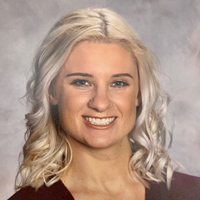
"This program will prepare you for veterinary school especially if your undergraduate school did not specifically have an animal-related major. I really appreciated the Medical Microbiology course because, although her exams were tough, the course introduced me to new methods for studying that I can take with me to veterinary school."
Read more.
Veterinary Schools Attended by Our Students
- Auburn University College of Veterinary Medicine
- Colorado State University College of Veterinary Medicine and Biomedical Sciences
- Cornell University College of Veterinary Medicine
- Iowa State University College of Veterinary Medicine
- Kansas State University College of Veterinary Medicine
- Lincoln Memorial University
- Michigan State University College of Veterinary Medicine
- North Carolina State University College of Veterinary Medicine
- Ohio State University College of Veterinary Medicine
- Oklahoma State University Center for Veterinary Health Sciences College of Veterinary Medicine
- Tufts University Cummings School of Veterinary Medicine
- Tuskegee University School of Veterinary Medicine, Nursing, and Allied Health
- University of California School of Veterinary Medicine
- University of Florida College of Veterinary Medicine
- University of Illinois at Urbana-Champaign
- University of Missouri College of Veterinary Medicine
- University of Pennsylvania School of Veterinary Medicine
- University of Wisconsin-Madison School of Veterinary Medicine
- Virginia-Maryland Regional College of Veterinary Medicine
- Washington State University College of Veterinary Medicine
- Western University of Health Sciences College of Veterinary Medicine
- University of Guelph
- University of Prince Edward Island Atlantic Veterinary College
- University of Edinburgh Royal (Dick) School of Veterinary Studies
- University of Glasgow Veterinary School
- Royal Veterinary College
- Ross University School of Veterinary Medicine
- St. George's University School of Veterinary Medicine
Memorandum of Understanding (MOU)
Each academic year, Ontario Veterinary College at the University of Guelph will hold one seat for an MLAS student who applies to the Doctor of Veterinary Medicine program.
Employment Opportunities
MLAS graduates are employed by universities, biotechnology institutions, government agencies, and pharmaceutical companies as supervisors, managers, trainers, veterinary technicians, educators, consultants and sales representatives.
Many MLAS graduates attend veterinary medical school and practice veterinary medicine.
Information Sessions
Prospective students can request an appointment for an information session about the program. If you would like to schedule an appointment, please contact Erin Vogelsong at eev25@drexel.edu or by phone at 215.762.7968.